There are many festivals and special days held throughout the Jewish year. Here are a few of them.
If you are interested to know more about these dates (and find out others!) you can view them on the Progressive Judaism Festival Guide. The specific dates for each of these events can be found on the Progressive Judaism Calendar.
Progressive Judaism holds many events throughout the year, not just festival specific. You can view all of them on their website.
Shabbat
Shabbat begins on Friday at sunset until Saturday night. This weekly event is a chance to ‘pause’ everyday life and commemorate the creation of the world – the final act being to cease work and be at rest.
It is a chance to be with family and take part in comforting rituals, such as lighting the Shabbat candles, hosting a family dinner and coming together in prayer. At our services a communal kiddush of light refreshments brings the community together.
Rosh Hashanah
Rosh Hashanah is the Jewish new year. It is a time to reflect on the year gone past and look forward to the year to come. It is a chance to gather with family and the community, to see how we can improve ourselves and the lives of those around us.
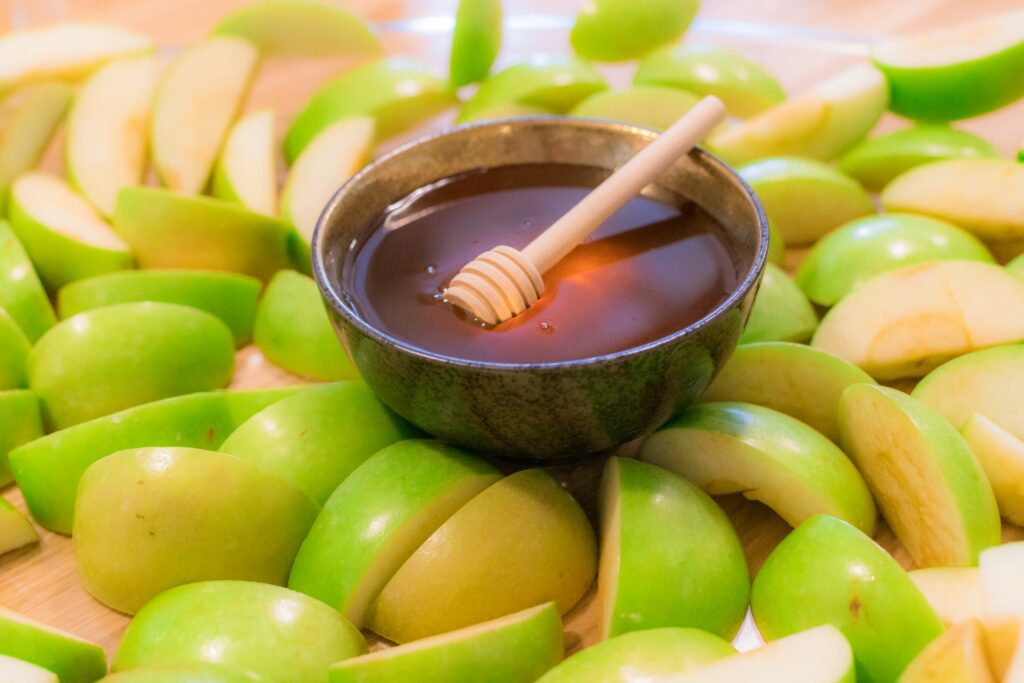
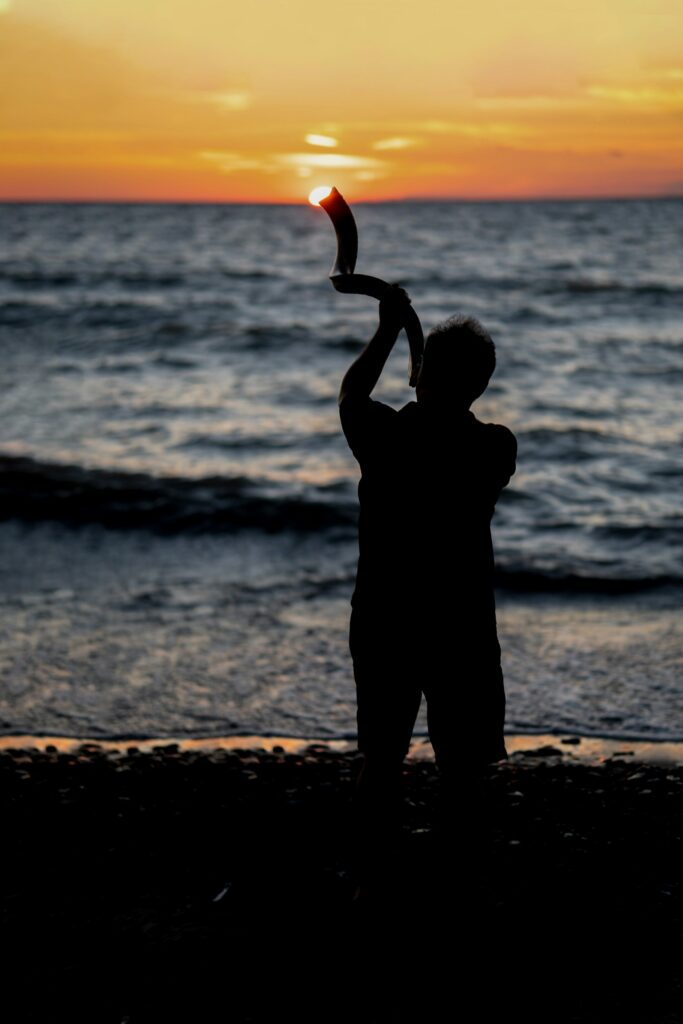
This is the day that marks the beginning of the High Holy Days, and the shofar (a ram’s horn) is sounded to acknowledge this and awaken the heart. We enjoy symbolic foods, such as apples and honey, to hope for a sweet and fruitful year ahead.
Yom Kippur
Yom Kippur is the holiest day in the Jewish calendar, also known as the ‘Day of Atonement’. It is where we reflect on the past year to repent, forgive and have a renewed sense of purpose for personal growth going forward. There is usually a Yizkor memorial service in order to remember those who are no longer with us.
There is a fasting period and intense prayer throughout the day, followed by a ‘break the fast’ meal at the end. We take this opportunity to raise funds in our High Holy Day Appeals.
Sukkot
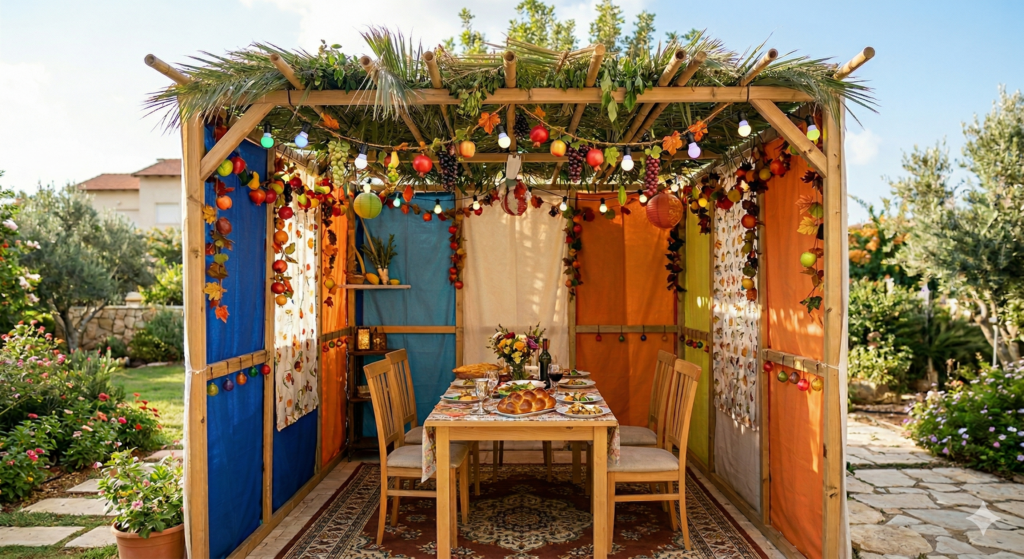
Sukkot is a week-long harvest festival, where we rejoice and give thanks for the autumn harvest. It also commemorates the biblical journey of the Jewish people walking through the wilderness for 40 years after Sinai.
Temporary booths, known as a Sukkah, are built. These are used to eat in and socialise under (sometimes to even sleep in!). They are adorned with leaves and fruit to help celebrate the Earth’s bounty.
We wave the “Four Species”—a bundle of specific plants including a palm branch and a citrus fruit called an etrog. This festival helps bring us towards a more joyous period after the heaviness of Yom Kippur. It is also a chance to be grateful for our own houses, and consider supporting charities which help the homeless or environmental issues.
Chanukah
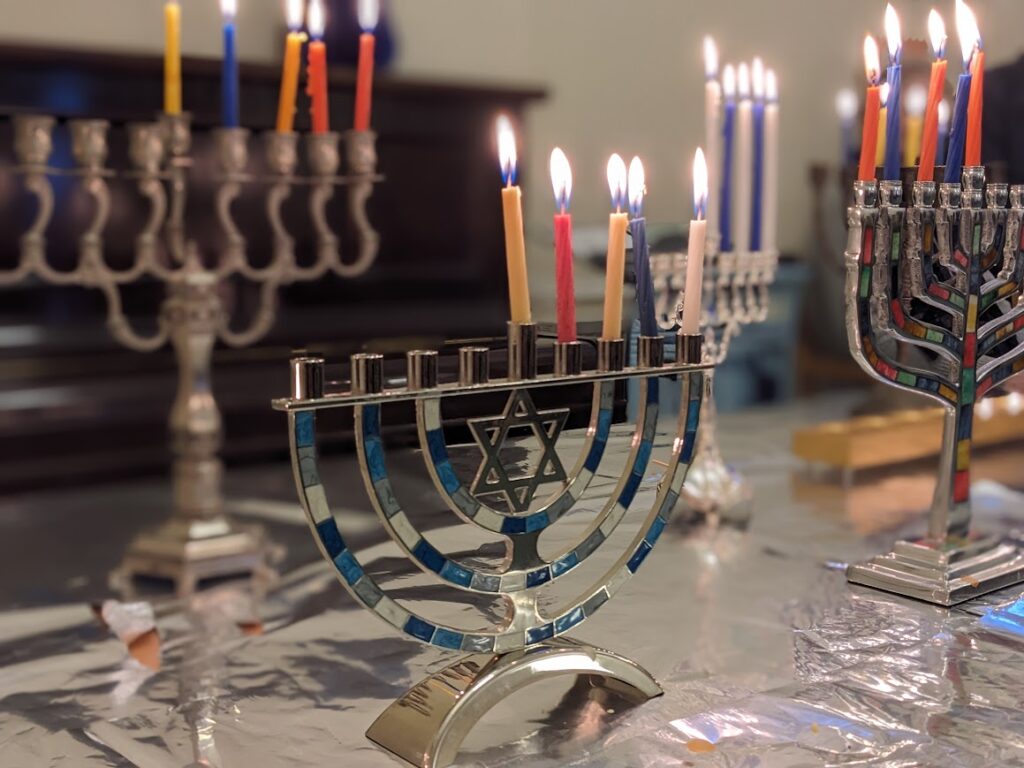
Chanukah is one of the most anticipated and joyous festivals. This commemorates the miracle of a single day’s supply of oil lasting for eight days. A Chanukiah (also known as a menorah) is lit every evening, either at home or at community events.
Due to the close proximity with Christmas, gifts are often exchanged or chocolate coins given (known as gelt). The dreidel (a spinning top) game is played, and parties are held with oily foods to help remember this miracle and the triumph of light over darkness.
Tu BiShvat
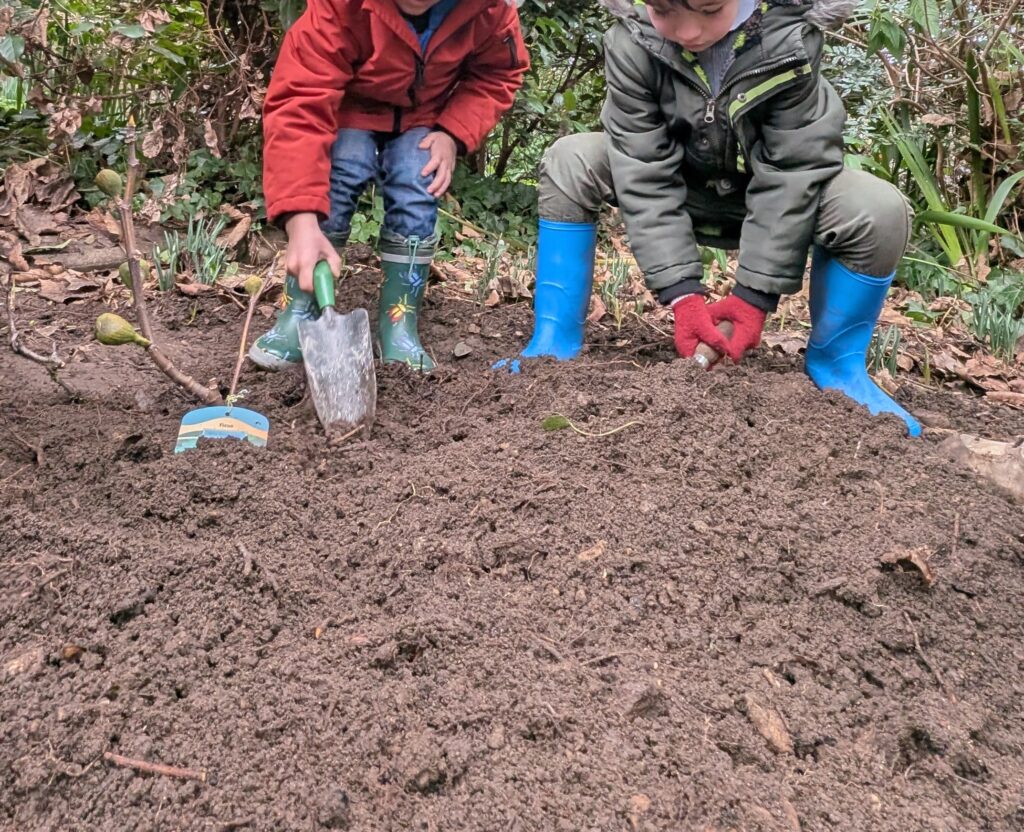
Tu BiShvat is the Jewish New Year for Trees. It is a time to reconnect with the wonder that is our natural world. We renew our promise to help protect the world and promote new growth. Trees are planted to help deepen our connection to nature physically and spiritually.
A special seder at home or events in the community will have a meal of fruits, nuts and wine/grape juice. Dates, figs and pomegranates are also eaten as these are associated with the Land of Israel.
Purim
Purim is a joyous holiday that celebrates the salvation of the Jewish people from a plot to destroy them in ancient Persia. It is observed with a festive spirit including dressing in costumes, sharing gifts of food (mishloach manot), giving to the poor, and listening to the public reading of the Megillah (the story from the Book of Esther).
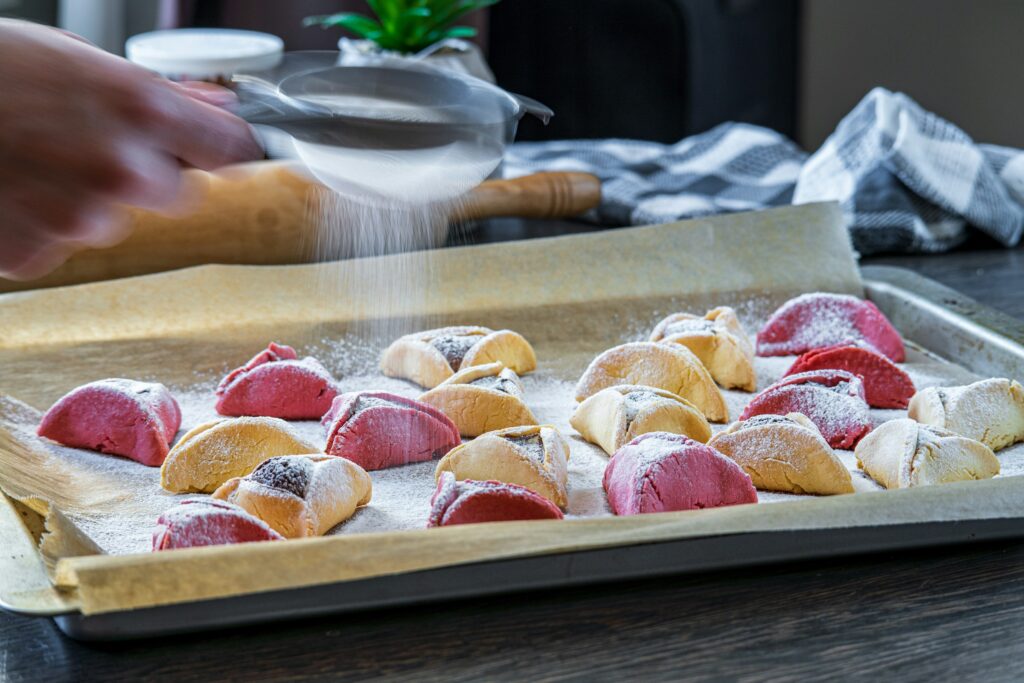
A popular Purim treat is Hamantaschen. They are triangular pastries, filled with poppy seeds, jam, or chocolate – that are said to resemble the ears of the antagonist Haman.
Pesach
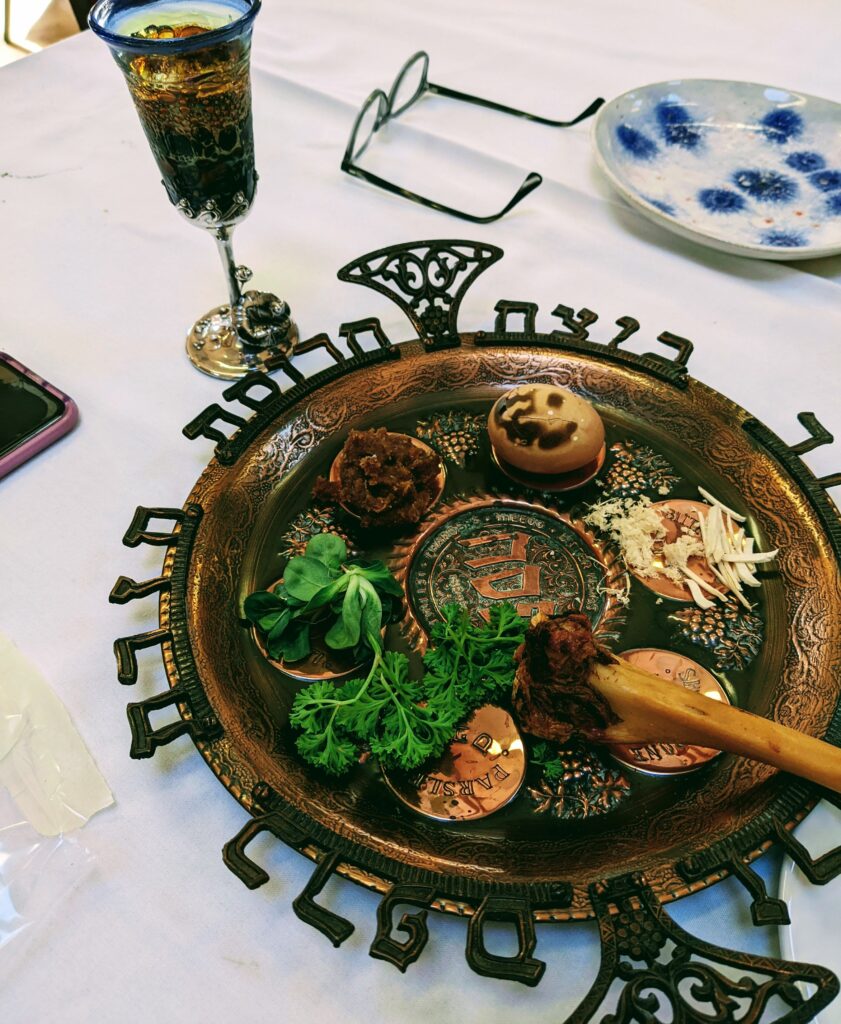
Pesach (also known as Passover) follows Purim in the Jewish calendar, and for our community is one of the most popular after Chanukah.
It commemorates the biblical Exodus and the liberation of the Israelites from slavery in ancient Egypt. It is centered around a communal Seder, a ritual meal where the story is retold. It is characterized by the strict prohibition of leavened bread, eating matzah instead, to remember the haste in which the Jews fled their homes. As the story is told, it is reflected in symbolic foods eaten along the way.
Other important dates
Holocaust Memorial Day
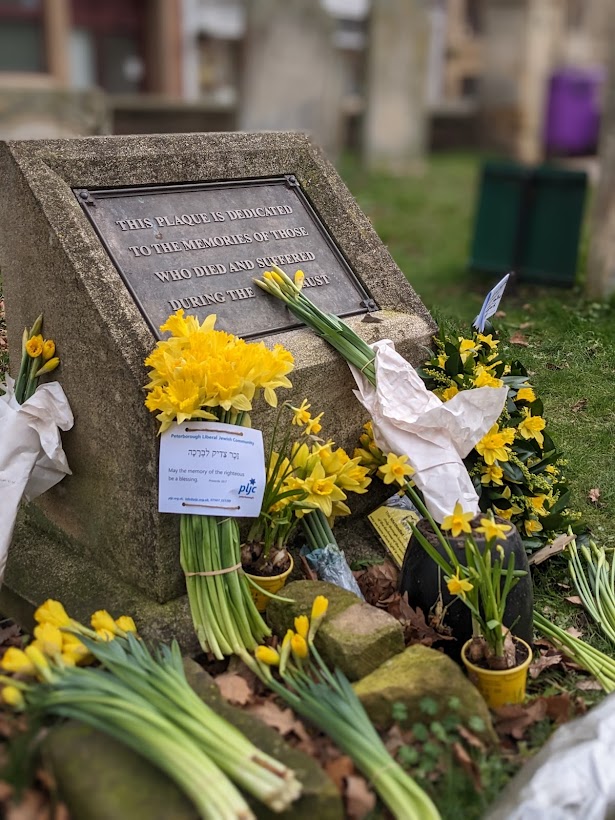
Holocaust Memorial Day (Yom HaShoah) is a national day of deep mourning and reflection dedicated to honoring the six million Jews and millions of other victims murdered by the Nazi regime. It is held on 27 January each year.
Commemoration events are held throughout the country, some organised by councils and charities, such as the Holocaust Memorial Day Trust.
We also take this opportunity to reflect on prejudices that happen to this day, in hope of a renewed worldwide commitment to the phrase ‘never again’.
Mitzvah Day
Mitzvah Day is the UK’s largest faith-led day of social action where people come together to perform “mitzvot” (good deeds) to support their local communities. It focuses on giving time and hands-on service, such as visiting the elderly, cleaning up parks, or collecting food for those in need. Volunteering often takes place alongside people of different faiths and backgrounds.
You can learn more about this day and volunteering opportunities at the Mitzvah Day website. Mitzvah Day takes place on the third or fourth Sunday in November.